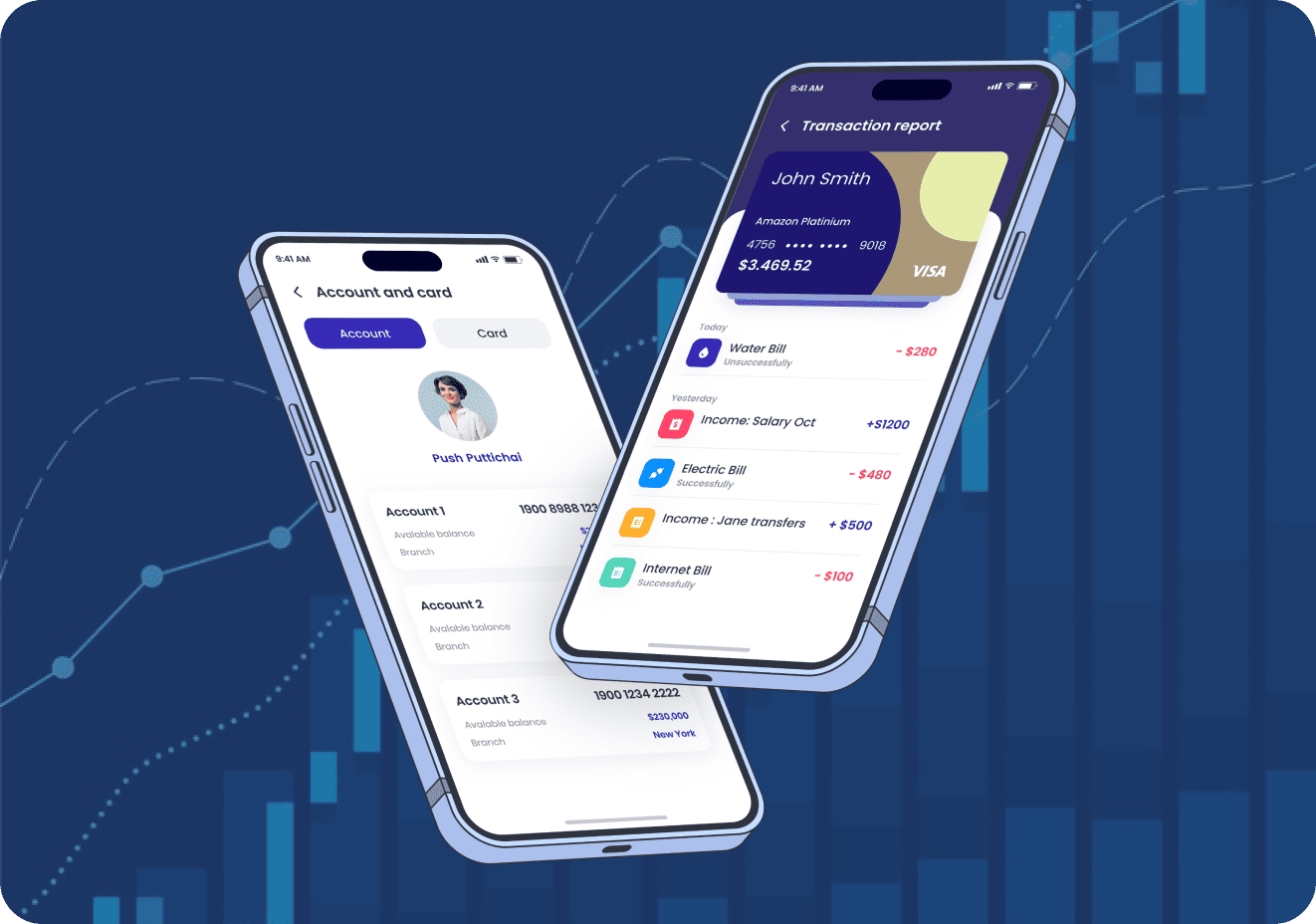
TechVision offers lending software development, building platforms around the client’s own workflows and business rules. We build for lenders, borrowers, and staff for clients such as banks, fintechs, mortgage firms, and alternative finance providers. Across the entire loan lifecycle, we develop custom lending solutions with integrations and process automation planned up front, and encryption and access controls in place from the first sprint.
Describe the lending product you want to launch or replace and where it fits in your loan operations. Our CEO will walk through the scope with you and send a cost and timeline estimate.
TechVision offers custom software development for lenders who want a platform shaped around their loan offering and credit policies. We develop lending software for segments such as commercial lending, consumer credit, auto finance, and equipment leasing. From architecture to production, TechVision handles the full build and stays on to extend the platform as the business grows.
TechVision is a lending app software development company that builds web and mobile apps for the client’s customers and staff. Web and mobile versions share one backend, so business rules and data stay consistent across devices. We cover native iOS, native Android, cross-platform, and web builds, and handle UX design and app store release.
TechVision takes on integration projects for lending platforms as a separate service, including platforms another vendor built. With this service, we connect lending software to third-party services and keep those connections working as providers update their APIs. For connections that need a custom interface, TechVision designs and documents the API.
TechVision moves legacy lending systems onto a current technology stack. We refactor, re-architect, rebuild, or migrate the code in stages, so loan operations keep running during the work. Historical data moves to the new platform with integrity checks at each stage, ready for the next phase of digital transformation.
TechVision offers quality assurance as a standalone service for lending platforms, whether built in-house or by another vendor. Alongside test execution, we set up QA strategy, defect tracking, test automation, and release quality gates. Testing covers aspects like functionality, performance, security, and regulatory compliance.
TechVision also provides maintenance and continuous development as a separate service. We take on work such as bug fixes, security patches, infrastructure monitoring, and new feature releases under one support agreement. The same TechVision engineers stay on the platform over time. They know the codebase, which keeps estimates accurate and operational costs predictable.
Consulting engagements cover topics such as scope, architecture, vendor selection, and build-versus-buy decisions. With this service, lenders can book a one-off review or work with a senior advisor on an ongoing basis alongside their in-house team. We also help internal teams drive lending software projects with roadmap planning and technical oversight.
TechVision develops automated loan origination platforms shaped around in-house credit policy and compliance needs. A faster loan origination process means fewer applicants drop out before funding.
Our engineers build loan management systems around the servicing policies already in place. Automating routine servicing tasks lowers loan servicing costs, so the portfolio can grow without a matching rise in headcount. Complete account records shorten audit preparation. When regulations change, vendors can update the platform on their own schedule, with no wait for a vendor release.
Credit scoring software development at TechVision covers scoring and underwriting rules, built on existing risk models. Consistent credit assessment lowers default rates and gives a clear basis for every decision at audit.
As a loan lending app development company, TechVision builds borrower portals under your brand. A shorter borrower onboarding flow helps more applicants finish signing up and return for their next loan. Self-service also lowers support costs as the customer base grows.
TechVision builds disbursement and repayment software with the same payment expertise behind our fintech application development services. Support for multiple payment methods raises on-time repayment rates and lightens the later load on collections.
Collection platforms from TechVision help a lending business recover more of what it is owed. Higher recovery rates mean fewer write-offs and steadier cash flow over the life of the portfolio. Delinquency insight also strengthens risk management, so future credit decisions reflect real repayment behavior.
We build P2P and marketplace lending platforms for consumer loans and any other credit a marketplace offers. TechVision designs the platform to scale on both sides, so investor capital keeps pace with borrower demand.

TechVision develops software around the underwriting and closing rules of mortgage providers. Shorter time to closing keeps more loans inside their rate-lock window, so more deals close at the quoted rate. Complete digital loan files also shorten investor due diligence when loans sell on the secondary market.
For merchant cash advance businesses, TechVision develops digital lending software built around funding speed and portfolio returns. Portfolio data stays in-house, so underwriting models improve with every funded advance.
TechVision connects lending platforms to external providers and internal systems, such as:
For security and compliance purposes, we build in controls such as:
Financial institutions of any size can rely on TechVision for lending platforms and broader banking software development services. New lending products launch on top of the current core, so proven infrastructure stays in place.
TechVision builds digital lending solutions for fintech companies that need to reach the market fast. We can start with an MVP and grow it into a full platform as the business proves its model.
TechVision helps mortgage lenders shorten the loan approval process with software built to their own rules. The platform scales up and down as loan volume changes.
For alternative and MCA lenders, we build platforms for personal loans and other credit types. New offers can go live fast for testing, and the ones that perform stay.
TechVision helps P2P and marketplace lending companies bring new lending services to market sooner. We extend the platform with new investor products and markets as the marketplace grows.
Off-the-shelf lending platforms often charge per loan or per seat. With a custom build, costs follow development and hosting, so higher loan volume adds margin without adding license fees.
Vendor scoring models often rely on data pooled across many lenders. Once you have enough repayment history, a custom platform can run predictive analytics on it and match risk signals to your real borrowers.
Investors and acquirers review a lender’s technology during due diligence. A platform the business owns can strengthen its position in funding rounds or a sale.
A custom build follows internal workflows and connects the tools staff already use, so loan officers work in one system. Applications move faster between steps, and borrowers hear back sooner, which supports customer satisfaction.
One recent lending software case study comes from Built Technologies, a US platform for construction lending. A 10-member TechVision team joined the company’s in-house developers. Together, they worked to automate document processing and loan workflows, delivering the new workflows in six months. Loan processing time, from approval to disbursement, dropped from 15 to 9 hours, a 40% cut. See more case studies.
First, our analysts map your lending process with the people who run it. The result is a scoped backlog, along with a cost and timeline estimate.
Then, our architects design a system that covers the entire lending lifecycle and plan connections to the tools already in use. Data flows and security requirements are settled before coding begins.
Next, designers turn requirements into clickable prototypes. Real users try them early, so the screens match how people work before development starts.
At this stage, the development team builds the platform in short sprints with regular demos. Testing starts with the first line of code and runs alongside development the whole way through.
Before launch, a final validation round acts as the release gate. QA engineers run tests such as regression, load, security, and compliance on the release candidate.
Finally, we release the platform to production and stay on to improve it. Advanced analytics on real usage help decide which change ships next.
TechVision brings hands-on experience with complex financial integrations, such as banking cores and payment networks. These connections usually carry the highest technical risk in a lending build, so we tackle them first.
Retrofitting security after an audit finding costs more than planning it from the start. TechVision treats compliance as a design input, so audit reviews run against an architecture planned for them.
Under our lending software development services, every project begins with a scope review led by the CEO. The CEO signs off on the estimate and the delivery plan before work starts.
Questions go straight to the engineers building the platform. Technical trade-offs get discussed with the people who understand them best. Shared access to the backlog and repository keeps progress visible at any point.
TechVision engineers push back when a simpler design would do the same job. Lean architecture choices protect the budget now and operational efficiency later.
Code and architecture decisions get documented as the work happens. An in-house team or another vendor can pick up the platform later, so knowledge stays with the business.
Here’s our technical stack for lending software development:
Share where your lending platform stands today and what it should do next. TechVision engineers will review it and send a phased delivery outline.
TechVision’s lending software development process runs through six stages: discovery, architecture, design, development, validation, and deployment. Testing runs from the first line of code, and a separate validation round gates the launch. Working software appears at regular sprint demos, so progress stays visible throughout. Support and improvements continue after release.
The cost of a lending platform built by TechVision depends on scope. Key cost drivers include the number of third-party integrations and the compliance requirements involved. Platform coverage across web and mobile matters too, as does any data migration from older systems. Team size and delivery speed also shape the budget. For an exact number, TechVision’s CEO reviews the scope and sends a cost and timeline estimate.
Yes. TechVision builds risk assessment logic into lending platforms. Models can build on a lender’s existing scorecards or be developed from scratch with its analysts. Inputs can include sources such as credit bureau data, bank transactions, alternative data, and repayment history. Every decision is logged with its inputs for audit.
Yes. TechVision starts with a technical audit of the current platform’s code and architecture. The findings show which modules to keep and which to rework. Targeted changes, such as new integrations, automated workflows, faster reports, or a modern borrower interface, can streamline lending operations on the existing foundation. Data and user accounts stay where they are. A full rebuild comes up only when the audit shows it costs less over time.