TechVision is an EMR & EHR software development company. We build custom EHR and EMR systems for hospitals, health systems, clinics, medical practices, specialty providers, EHR vendors, and digital health startups. Healthcare providers hire us to replace legacy tools with software built around their workflows. The result they're paying for: faster clinical documentation, protected patient data, less administrative work, and one connected electronic health record, so every clinician sees the full picture of care.
Tell us what your clinicians still chart after their shift ends. We'll suggest the shortest way to fix it, and the first consultation costs you nothing.
Not every engagement we take ends in a build, and that's by design. Bring us the build-versus-buy question or an EHR that underperforms, and you'll leave with a plan you can execute without us. Our healthcare IT consulting services stand on their own.
This is the service most clients come for, and the one we're judged by as an EHR & EMR software development company. EMR/EHR custom software development at TechVision means a system shaped by your clinical reality, from the data model down to the screen a nurse sees at 3 a.m.
Old systems rarely die quietly. When your legacy EHR reaches its limits, we rebuild it on a modern stack and migrate your medical records in verified batches, so the practice keeps running through the switch. Our migration plans maintain data integrity and the go-live date at the same time.
An EHR that ignores your existing systems creates more work than it removes. TechVision connects new software with labs, pharmacies, billing engines, and HL7/FHIR exchanges, and we treat seamless integration as a requirement we test, with interface logs to prove it.
Your EHR doesn't need to be our build for us to test, secure, and support it. TechVision runs performance and penetration testing on existing systems, verifies HIPAA compliance through documented audits, and takes over long-term support when your current vendor has gone quiet.
Modules are where an EHR earns its keep, so this list gets specific. Below are the EMR/EHR software solutions we build most often, on their own or as parts of a larger system.
A patient portal pays off only when people log in twice, and that second visit is what we design for. Give patients readable health records and a painless way to act on them, and calls to your front desk drop. That’s the practical shape of patient engagement, and you can measure it after launch.
Documentation is where healthcare professionals lose their evenings, and no screen redesign fixes that on its own. So we shrink the writing itself. Natural language processing turns a spoken encounter into a draft note, the clinician reviews it where a blank page used to be, and the chart closes before the next patient sits down.
Prescribing goes wrong when the medical history sits in one system and the order form in another. We build eRx modules that close that gap at the moment of ordering, so the warning appears while the decision is still cheap to change. Medical professionals keep the final call; the software makes it a well-informed one.
Denied claims are usually preventable, and prevention costs less than appeals. Our billing and revenue cycle modules catch the errors payers punish before the claim ever leaves your system. And since healthcare regulations shift by state and payer, we build the rules as configuration, so your billing team adjusts them without calling a developer.
An alert that fires too often trains clinicians to ignore it, which is worse than no alert at all. We build clinical decision support tools around that hard truth. Each one draws on your patient data and your own protocols, speaks up at the moment a decision is being made, and stays quiet the rest of the time.
Care stopped waiting for the exam room years ago, and your software should have followed. TechVision builds mobile EHR apps and telehealth platforms that hold up under real clinical conditions, where a dropped connection can mean a missed finding. Our telemedicine software development practice covers the visit itself, while remote patient monitoring integration keeps healthcare providers informed between appointments. The result is care that continues after the patient goes home.
Every security conversation with a client reaches the same question sooner or later: if a regulator asks who opened this record and why, can you answer? An EHR and EMR development company earns its keep by making that answer easy. So TechVision starts with data governance, deciding who may touch which record and under what authority, then wires audit trails through every action so the system can testify for itself. Encryption matters too, and we apply it in transit and at rest, but encryption only hides data. Governance and evidence are what defend it. And when the project ends, the security documentation goes to you, because your compliance officer shouldn’t have to take our word for anything.
Every medical specialty documents care in its own way, and a general-purpose EHR flattens those differences. Here's what our offer covers:
Book a free 30-minute call. You'll get a rough scope, a technology recommendation, and an honest answer on whether we're the right fit from our senior specialists.
Ready-made platforms cover the basics. They often lack the flexibility to match specific workflows. TechVision provides custom EHR/EMR software development, building solutions that adapt to the specific needs of medical practices.
We offer custom EMRs for mental health clinics that support progress notes, therapy plans, medication tracking, and patient history in a secure environment. Such systems bring clearer records and smoother cooperation among clinicians.
Pediatric practices often require unique functionality that general EHRs overlook. We build custom pediatric systems with growth charts, vaccination schedules, dosage calculators, and parent-friendly patient portals.
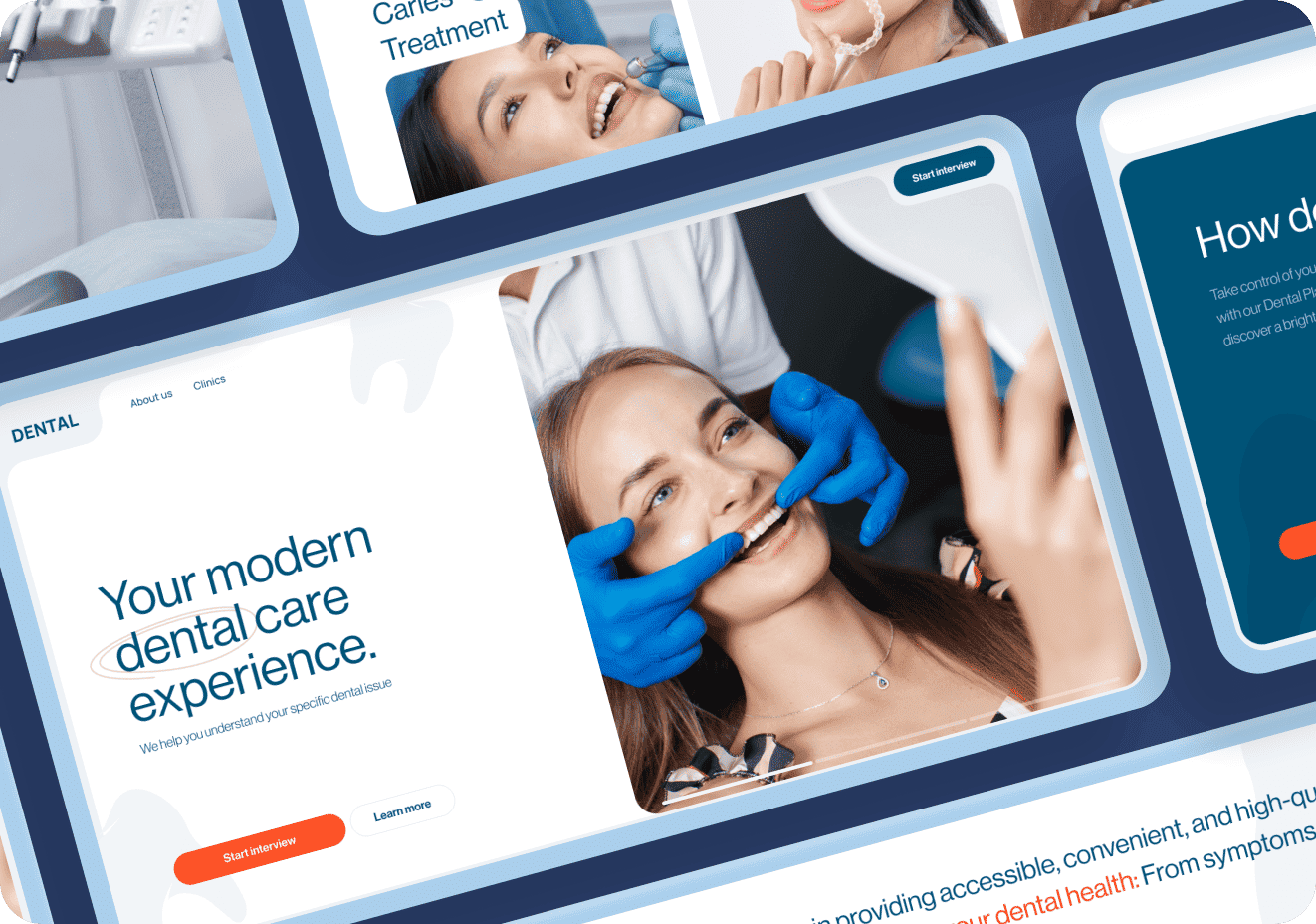
We specialize in building custom dental software that combines patient records, imaging integration, treatment planning, and financial analytics in a single system. The result is smoother workflows for the team and a better experience for patients.
TechVision develops ophthalmology-focused EHR systems that support visual field tests, retinal imaging, lens prescriptions, and surgical planning within one interface, helping ophthalmologists deliver quality care and maintain efficient operations.
Our EMR/EHR development services include cardiology-focused systems that integrate ECGs, imaging, lab results, and medication histories in a single record. They also support remote patient monitoring and improve care coordination.
Healthcare is where most of our engineering hours have gone, and electronic health record systems sit at the center of that experience. As your EMR/EHR system development partner, TechVision delivers compliant software shaped by real clinical practice.
Software that annoys a nurse gets abandoned, whatever it cost. Our EHR/EMR software developers design for the person at the keyboard, which mostly means subtraction: fewer clicks per task, fewer screens that fight the flow of care. Adoption is the payoff, and it’s the metric we watch.
Passing an audit shouldn’t require archaeology. TechVision delivers every project with the compliance evidence already assembled into a package your officer can hand to a regulator as-is, from access policies to the audit documentation behind them. That preparation saves weeks when certification season arrives.
An estimate you can’t trust is worse than none. Our fix is scoping in verifiable increments: each one either lands on budget or triggers a conversation before the next begins. Clients stay because the numbers behave.
A working system is the minimum; a practice grows on patient engagement. We design portals and reminders that patients actually use, and the difference shows up first in your no-show rate, then in how fast the bills get paid.
Every project in our healthcare portfolio started with a person who'd run out of patience. Sometimes a clinic drowning in paperwork, sometimes a founder whose care model no off-the-shelf system could hold. The case studies below show what TechVision built for them, and what changed after.
We start any development process by watching how your organization actually works, then we write it down. Workshops with your staff become a requirements specification that everyone recognizes.
Design comes before code, on purpose. Wireframes and clickable prototypes give your stakeholders something concrete to argue with, and the arguments happen before a single line gets written.
We develop in Agile sprints, so the electronic health record grows in increments you can inspect and redirect while changes are still cheap. Integrations with your lab and billing systems land early in the schedule, because interface surprises found at the end are the expensive kind.
Nothing ships until it survives testing under production-scale load and real user acceptance. Compliance with healthcare regulations gets verified through documented audits throughout development.
For TechVision, launch sits in the middle of the project, and the second half matters as much as the first. Through ongoing support, we fix what production reveals, and when your clinicians start asking for more, we build that too.
Explore the technical stack behind our EMR/EHR software development services:
Healthcare organizations come to us at very different sizes and stages, and the software solutions change accordingly:
TechVision is an EHR/EMR software development company with years of experience building scalable and secure systems without compromising compliance or performance. In this section, we gathered the most frequently asked questions about EHR/EMR software development, covering timelines, costs, the differences between EMR and EHR systems, compliance issues, data migration and more. Can't see your question on the list? Connect with us, and we'll walk you through everything you need to know.
Ask a QuestionAn EHR/EMR software development company builds the software that clinics and hospitals run patient records on. Some clients need a system built from zero, others bring an existing one that needs modernizing or connecting to the rest of their tools. TechVision covers both cases.
An EMR (electronic medical records) is the digital version of a patient chart used within a single practice. An EHR (electronic health records) is designed for sharing data across providers, hospitals, labs, and pharmacies. Put simply, an EMR keeps one practice organized, while an EHR lets the patient’s information travel with them.
Yes, and integration work makes up a large share of our projects. We connect our builds with third-party EHRs and practice management software over HL7 or FHIR, and older interfaces don’t scare us. If your system can exchange data at all, we can most likely talk to it.
Yes, we treat migration as its own discipline. Your medical records move through a verified plan and get checked before the old system retires, so nothing disappears in the handover. We’ve pulled data out of formats their own vendors had abandoned.
HIPAA compliance starts on day one of the project, not at the audit. In practice, that looks like role-based access, so a front-desk login never opens what only a physician should see, and an audit trail that records who viewed each chart. Patient data stays encrypted at rest and in transit, and for European clients, the same discipline extends to GDPR.
Not always. Certification matters when you’ll bill under federal programs that require certified technology or sell your EHR to providers who do; a system used only inside your organization can often skip it. We’ll tell you which case you’re in early, since the answer affects budget and timeline.
A focused EHR takes shape in roughly three to six months and starts around $20,000, which sits at the low end of what the market charges for comparable builds. Larger, multi-department systems climb into six figures over a longer schedule. We scope in verifiable increments, so you’ll see your real number before committing to it.